
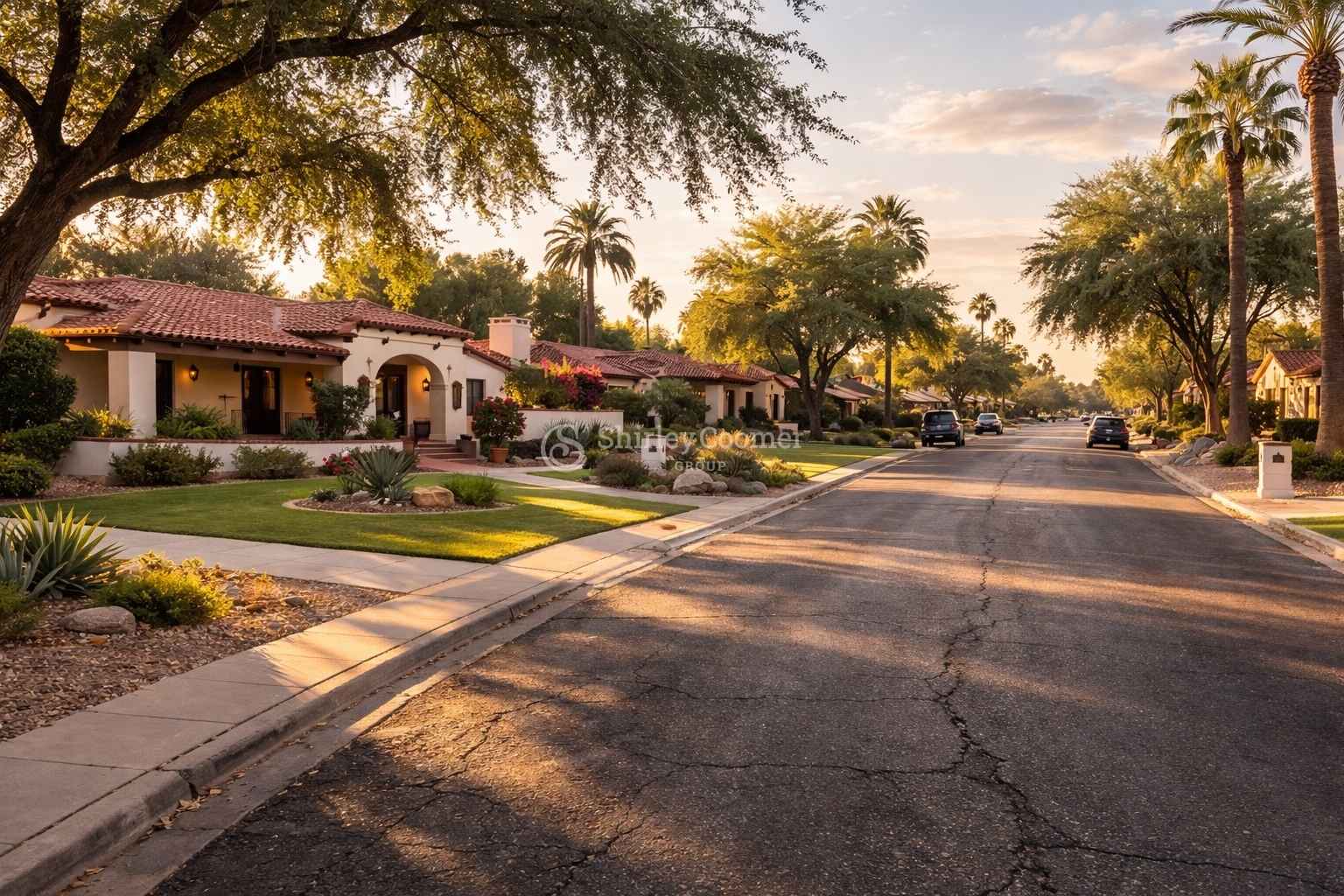
If you are drawn to older homes with character, tree-lined streets, and architectural details you simply do not find in newer subdivisions, Phoenix historic districts often rise quickly to the top of your list. At the same time, many buyers pause because they are unsure what historic designation really means, what restrictions apply, and whether owning in one of these neighborhoods fits how they want to live.
I work with buyers and sellers across the Phoenix metro area who are considering historic homes, and the questions are consistent. What can I change? What should I plan for? Does historic status affect resale value? And are all older neighborhoods considered historic?
This anchor guide explains how Phoenix AZ historic districts work and serves as the foundation for a blog series that explores each of the city’s 36 residential historic districts in detail.
How Phoenix AZ historic districts are structured
Phoenix currently has 36 officially recognized residential historic districts listed on the Phoenix Historic Property Register. In addition, the city recognizes approximately nine non-residential historic districts and more than 200 individually designated historic properties.
Historic designation is overseen by the City of Phoenix Historic Preservation Office, which evaluates neighborhoods and properties based on age, historical significance, and integrity. Not every older home qualifies, and not every charming neighborhood carries historic status.
Understanding whether a home is locally designated, federally recognized, or simply older without designation is one of the most important early steps for buyers.
How neighborhoods qualify for historic designation in Phoenix
Age establishes eligibility, not automatic approval
Most historic districts in Phoenix include homes that are at least 50 years old. Age alone does not make a home historic. Buyers are often surprised to learn that many 1950s and 1960s neighborhoods never received designation.
Historical or architectural significance must be demonstrated
A district must show historical importance, such as architectural styles, early Phoenix development patterns, or association with significant community growth. Many districts reflect bungalow, ranch, or mid-century architecture that shaped Phoenix’s identity.
Integrity determines long-term eligibility
Historic integrity refers to how much of the original character remains. Rooflines, windows, materials, and overall design matter. Neighborhoods that experience extensive alterations over time can lose eligibility.
In practice, integrity is one of the most misunderstood factors for buyers considering renovations.
The designation process homeowners should understand
Survey and documentation
The city often begins with a historic property survey to identify qualifying areas and document architectural features.
Review by the Historic Preservation Commission
A nomination is reviewed by the Historic Preservation Commission, which includes residents and professionals such as architects and historians.
Historic Preservation overlay zoning
Once approved, the area receives a Historic Preservation overlay zoning, commonly called an HP overlay. This creates legal protections for the district’s exterior character.
Public hearings and City Council approval
Public hearings allow community input before final City Council approval. Neighborhood participation is a meaningful part of the process.
Local versus federal recognition and why it matters to buyers
Homes listed on the Phoenix Historic Property Register are subject to city review for certain exterior changes. A Certificate of Appropriateness may be required before exterior alterations or demolition.
This process protects neighborhood character but does require planning.
Some districts or properties are listed on the National Register of Historic Places. Federal listing is largely honorary unless federal funding is involved.
In Arizona, some National Register properties may qualify for property tax reductions, sometimes up to 50 percent, depending on participation requirements. Federal listing alone does not automatically restrict exterior changes unless paired with local designation.
What buyers should understand before purchasing in a Phoenix historic district
Location within central Phoenix is a major advantage
Most Phoenix historic districts are concentrated in central Phoenix, placing them close to:
- Downtown and Midtown employment centers
- Major hospitals and medical campuses
- Cultural institutions and museums
- Light rail stations
- Established dining and arts corridors

Districts such as Encanto, Willo, Roosevelt, and FQ Story offer proximity that many buyers prioritize over newer construction farther from the core.
Walkability and daily lifestyle drive buyer demand
Many historic districts were designed before car-centric planning. Buyers often enjoy:
- Sidewalk-lined, tree-shaded streets
- Walkability to restaurants, coffee shops, and neighborhood parks
- Easy biking access to downtown and midtown areas
Buyers frequently tell me their day-to-day lifestyle changes after moving into a historic district. More walking, more neighborhood interaction, and more time spent locally.
Close-knit community is part of the package
Historic districts tend to attract homeowners who value long-term neighborhood stability. Buyers should expect:
- Active neighborhood associations
- Community events and home tours
- Strong pride of ownership
This environment suits buyers who value connection and involvement. It may feel restrictive for buyers who prefer minimal interaction.
Renovation flexibility depends on planning, not perfection
Interior renovations are generally unrestricted. Exterior changes may require review, but that does not mean updates are impossible.
Buyers who plan updates thoughtfully and understand which renovations truly protect resale value tend to have the best long-term experience. I break this down further in my guide on what home remodeling projects provide the best return.
Inspections matter more in older homes
Historic homes are not inherently fragile, but they require careful evaluation. Buyers should expect:
- More detailed inspections
- Older construction materials and methods
- Deferred maintenance from prior owners
I consistently advise buyers to go beyond a basic home inspection. Here is a breakdown of what inspections Phoenix buyers should consider before purchasing an older home.
Insurance and financing should be addressed early
Some lenders and insurance carriers ask more questions on older homes. This does not mean transactions fail, but early conversations help avoid delays.
Using professionals familiar with historic properties makes a difference.
Resale favors homes that respect the district
Historic homes tend to perform best when updates balance modern livability with preserved character. Buyers who remove defining features can limit future appeal.
Homes that honor the district’s identity while functioning well for today’s lifestyle often attract strong long-term interest.
Phoenix climate adds unique considerations
Desert conditions matter. Buyers should evaluate:
- Roof materials and condition
- Window performance
- Shade, lot orientation, and mature trees
Many historic districts benefit from established landscaping that newer neighborhoods cannot replicate.
How this Phoenix historic district blog series is structured
This anchor article serves as the foundation for a 36-part blog series, with one in-depth post dedicated to each residential historic district in Phoenix.
Each district blog will explore:
- Location and boundaries
- Architectural character
- Walkability and nearby amenities
- Buyer considerations
- Renovation and resale insights
Each post will link back here so readers can understand the broader historic framework before diving into individual neighborhoods.
Frequently asked questions about Phoenix AZ historic districts
How many historic districts are there in Phoenix?
Phoenix has 36 residential historic districts on the Phoenix Historic Property Register, along with additional non-residential districts and individually designated properties.
Can I remodel a home in a Phoenix historic district?
Interior renovations are generally unrestricted. Exterior changes may require city approval depending on the scope of work and designation.
Do historic homes qualify for tax incentives in Arizona?
Some homes listed on the National Register of Historic Places may qualify for property tax reductions. Eligibility depends on designation type and participation requirements.
Are historic homes harder to sell?
They attract a more specific buyer profile, but well-maintained historic homes in desirable districts often retain strong appeal.
If you are already thinking ahead to eventual resale, I outline the smart moves when selling your Phoenix home that help protect long-term equity.

Deciding whether a Phoenix historic district is right for you
Historic districts are about character, location, and neighborhood identity. For the right buyer, they offer a lifestyle that newer developments cannot replicate.
I am Shirley Coomer, a licensed Arizona real estate agent with Keller Williams Realty, and I work with buyers and sellers throughout Phoenix and nearby central corridor communities. If you are considering a historic district and want help evaluating location, walkability, renovation plans, and long-term resale, you can call or text me at 602-770-0643 or email me at scoomer@kw.com to talk through which districts may best align with your goals.
