
You may still believe in real estate, but that does not mean you still want tenant calls, repair decisions, vacancy stress, and late-night property problems. If your rental property was supposed to support retirement, but now feels like it owns your time, 1031 exchange and DST options may be worth discussing before you decide what to do next.
1031 Exchange and DST Options Can Open a Planning Conversation
In the last article, we looked at why the tax tail should not wag the investment dog. Taxes matter, but they should not be the only reason you keep a rental property that no longer fits your goals.
This article looks at one possible planning path some investors explore when they still want real estate exposure, but no longer want active landlord responsibilities.
A 1031 exchange is a tax-deferral strategy that may allow an investor to sell one investment property and purchase another qualifying investment property while deferring certain taxes, when IRS rules are followed.
A Delaware Statutory Trust, often called a DST, is one possible replacement property structure used by some investors in a 1031 exchange.
In simple terms, a DST may allow an investor to own a fractional interest in professionally managed real estate, without personally handling tenants, repairs, leases, or daily property decisions.
A 1031 exchange is the tax-deferral process. A DST is one possible replacement property option some investors may consider within that process.
This is not a recommendation for every investor. It is also not legal, tax, or financial advice. A 1031 exchange and DST should be reviewed with your tax professional, qualified intermediary, financial advisor, and attorney.
The Real Question Is Not “Should I Sell?”
When a landlord feels stuck, the first question is often, “Should I sell?”
That is not the best starting point.
A better question is: “What is this property supposed to do for me now?”
If the answer has changed, the strategy may need to change too.
I’m Shirley Coomer, a licensed Arizona real estate agent with Keller Williams Realty serving the Phoenix metro area. I work with homeowners, rental owners, downsizers, and families who are trying to make real estate decisions that fit their next stage of life.
In my Phoenix-area real estate work, I often see rental owners who still believe in real estate but no longer want the workload that comes with direct ownership. They may have good equity, long ownership history, and a property that looks successful from the outside.
Privately, though, they are tired.
The calls get old. Repairs become harder to coordinate. Vacancies, roof issues, and AC replacements can start to feel like interruptions to retirement instead of normal business decisions.
That is not just a property issue. It is a planning issue.
Direct Ownership Can Become a Second Job
A rental property can be a powerful asset. It can also become a job.
That job may include:
- Screening tenants
- Handling lease renewals
- Responding to repair calls
- Replacing appliances
- Managing vacancy
- Paying insurance, taxes, HOA fees, and maintenance
- Reviewing property management reports
- Deciding when to raise rent
- Deciding when to sell
For younger investors, that work may feel manageable. For investors nearing or already in retirement, it can feel very different.
In Arizona, desert climate adds another layer. Roofs, HVAC systems, irrigation, pool equipment, stucco, and exterior maintenance are not minor details. A Phoenix rental home may look simple on paper, but real ownership still requires attention.
I have worked with Phoenix metro sellers who were not afraid of real estate. They were simply ready to stop operating it like a business they never fully retired from.

A DST Is Not the Same as Owning a Single Rental Home
A Delaware Statutory Trust is not the same as owning your own single-family rental home.
With a traditional rental, you own the property directly. You make decisions. You are responsible for the asset, even if you hire a property manager.
With a DST, an investor owns a beneficial interest in a trust that owns real estate. The trust is typically managed by a sponsor. The investor is not personally handling tenants, repairs, leasing, or property operations.
That difference matters.
A DST may include properties such as apartment communities, medical buildings, industrial properties, self-storage, or other commercial real estate assets. The exact offering depends on what is available and suitable at the time.
A DST can reduce day-to-day landlord duties, but it does not remove investment risk.
That is an important distinction. Passive ownership can reduce management responsibility, but passive does not mean risk-free.
Investors still need to understand liquidity limits, fees, income expectations, sponsor quality, debt structure, and whether the investment fits their larger financial plan.
1031 Exchange and DST Options Should Be Reviewed Before You Sell
A 1031 exchange should not be treated like a quick escape from a hard property.
It is a planning tool.
If you sell an investment property and want to defer taxes through a 1031 exchange, there are strict rules and deadlines. You must use a qualified intermediary. You must identify replacement property within the required timeframe. You must complete the exchange within the required exchange period.
Those details must be handled correctly.
That is why waiting until the property is already listed, under contract, or close to closing can create stress. The earlier you understand your options, the better your decision-making can be.
For some investors, the right next step may be another rental property. For others, it may be a smaller or easier-to-manage property. For some, a DST may be worth exploring. For others, selling and paying the taxes may still be the right decision.
The point is not to force a 1031 exchange.
The point is to stop letting taxes, fear, or habit make the decision for you.

What If Your Kids Do Not Want the Rental Properties?
Many rental owners assume their children will appreciate inheriting investment property.
Sometimes they will.
Sometimes they will not.
Adult children may live out of state. They may not want to manage tenants. They may not understand the property history. They may disagree with siblings. They may prefer simplicity over ownership responsibility.
That does not mean the rental property is bad. It means the estate plan may need a deeper conversation.
This is where real estate, estate planning, tax planning, and family communication can overlap.
If your property is part of your legacy plan, ask:
- Who would manage this property if I could not?
- Do my heirs want this responsibility?
- Would this property create income, conflict, or confusion?
- Is the current ownership structure aligned with my estate plan?
- Have I reviewed this with my attorney and tax professional?
As a Phoenix-area Realtor®, I am not the attorney, CPA, or financial advisor. My role is to help you understand the real estate side of the decision, including property value, marketability, timing, preparation, and possible sale or exchange pathways.
Passive Real Estate Still Requires Careful Review
DSTs are often discussed as passive real estate investments. That can be attractive to landlords who want less management.
But passive does not mean you ignore the details.
Before considering a DST, an investor should understand:
- What type of property is inside the DST
- Who the sponsor is
- How income may be distributed
- What fees apply
- Whether debt is involved
- How long the hold period may be
- What liquidity limitations exist
- What happens if the property underperforms
- How it fits into the investor’s estate and income plan
A DST is not a savings account. It is still real estate. Real estate has risk, cycles, management decisions, and market exposure.
The right question is not, “Is a DST good or bad?”
The better question is, “Does this structure help solve the problem I am trying to solve?”
Phoenix Rental Owners Often Need a Local Reality Check First
Before a rental owner explores a 1031 exchange, DST, or sale, the current property needs a clear review.
That starts with asset performance.
Not just appreciation.
Not just rent.
Not just equity.
Asset performance means looking at what the property is truly doing after expenses, time, risk, and opportunity cost are considered.
In the Phoenix metro area, that review may include:
- Current estimated property value
- Rental income
- Vacancy risk
- Repair history
- Insurance costs
- HOA rules or fees
- Property management costs
- Capital improvement needs
- Roof, HVAC, plumbing, and pool condition
- Tenant status
- Likely buyer pool if sold
- Timing and preparation needs
I have seen owners become surprised when they compare the equity trapped in a rental against the actual income it produces. A property can look strong because it appreciated, while still producing a weak return on equity.
That is exactly why Blog #4 in this series focused on appreciation hiding poor asset performance.
The Best Strategy Starts Before the Sale Sign
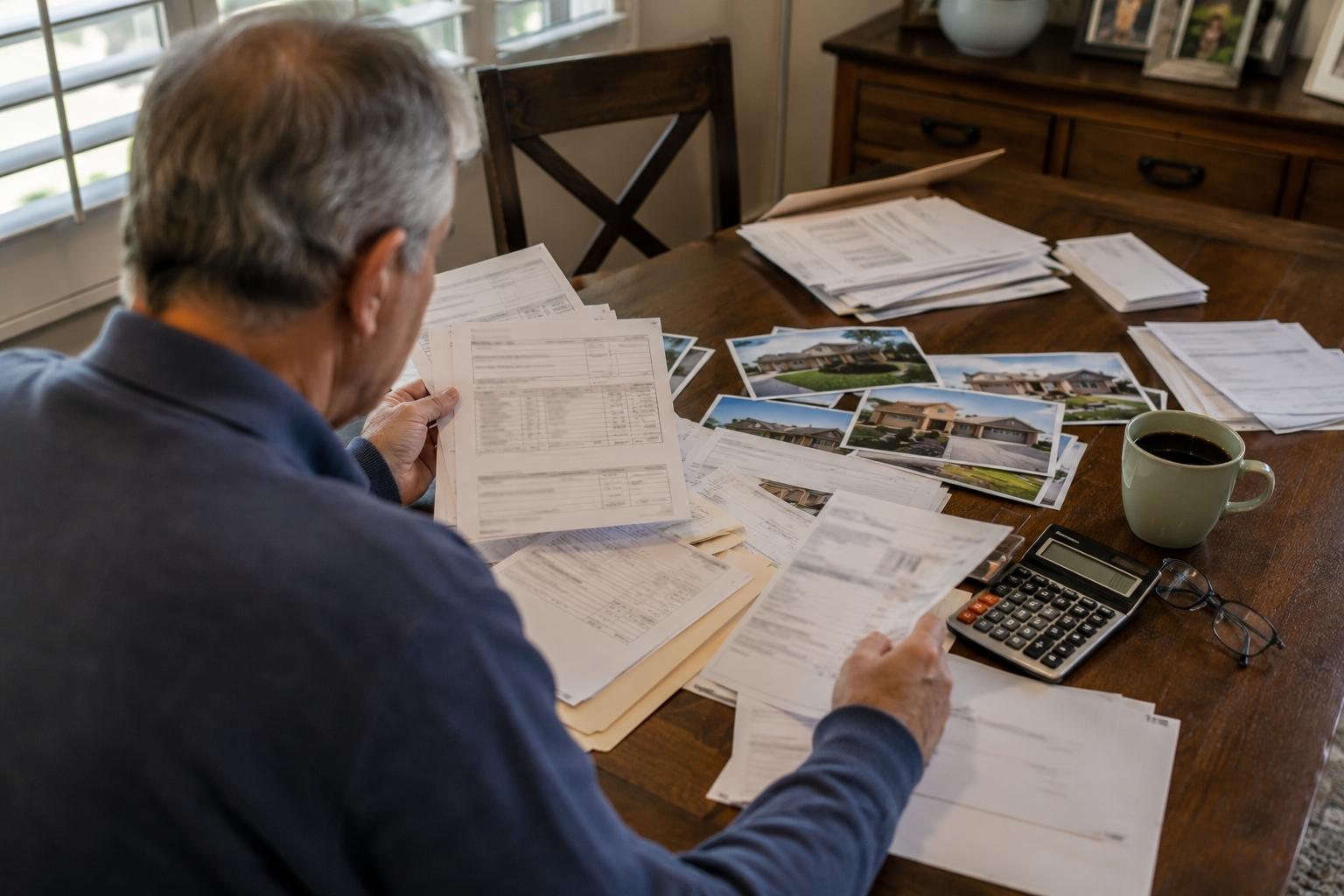
The worst time to start learning about 1031 exchange and DST options is after you already have a buyer and a closing date.
By then, the pressure is high.
You may feel rushed to identify replacement property. You may not have your tax professional involved. You may not have reviewed DST options. You may not have compared a traditional replacement property against passive alternatives.
That can lead to reactive decisions.
If you are thinking about selling a rental property in Phoenix, Scottsdale, Chandler, Mesa, Gilbert, or nearby East Valley communities, start the planning conversation before the property goes on the market.
That does not mean you must sell.
It means you need to know what your choices are before the clock starts.
For landlords, time is not just a deadline issue. It is a clarity issue.
A Real Estate Agent Can Help Organize the Property Side
If you are considering a 1031 exchange, DST, or sale of an investment property, a real estate agent is not a replacement for your tax advisor or legal team.
However, the right real estate agent can help you understand the property side of the decision.
That may include:
- Reviewing the current condition of the rental
- Estimating likely sale preparation needs
- Discussing tenant-related timing
- Helping evaluate marketability
- Coordinating with your qualified intermediary timeline
- Helping you prepare before listing
- Supporting communication with your planning team
As a licensed Arizona real estate agent, I help rental owners look at the property clearly before they decide whether to hold, sell, exchange, or explore other options with their advisors.
A transaction-only approach often starts with, “What price can we get?”
A planning-focused approach starts with, “What do you need this asset to do next?”
That is a very different conversation.
A 1031 Exchange and DST Strategy Should Fit the Life You Are Building
The right real estate decision should fit your life, not just your spreadsheet.
For some rental owners, direct ownership still works. The cash flow is strong, the property is manageable, and the long-term plan is clear.
For others, the property has become a burden. The income may not justify the stress. The equity may be underperforming. The heirs may not want the responsibility. The owner may want income without active management.
That is where 1031 exchange and DST options may deserve a closer look.
Not because they are magic.
Not because they eliminate risk.
But because they may help certain investors move from active landlord responsibility to a more passive real estate structure, while keeping tax deferral and long-term planning in the conversation.
The next question is not just what this property is doing for your retirement. It is also what this property could create for your heirs. In the next article, we will look at whether a rental property is helping or complicating your estate plan.
Frequently Asked Questions About 1031 Exchanges and DSTs
Can I use a 1031 exchange to move from a rental house into a DST?
In some cases, yes. A rental property owner may be able to sell investment real estate and use a 1031 exchange to purchase an interest in a qualifying DST. This must be reviewed with a qualified intermediary and tax professional before the sale closes.
Is a DST only for large investors?
DST offerings often have minimum investment requirements, and they are generally designed for accredited investors. The details vary by offering, sponsor, and investor situation. This is why professional guidance is important before making any decision.
Will a DST give me the same control as owning my own rental property?
No. A DST is typically passive. You do not personally control day-to-day decisions, tenant selection, repairs, leasing, or sale timing. That loss of control may be acceptable for some investors, but not for others.
Is a DST safer than owning a rental property?
Not automatically. A DST can reduce management responsibility, but it still carries real estate, sponsor, liquidity, income, and market risks. It should be evaluated as part of your full investment and estate plan.
When should I start planning if I might want a 1031 exchange?
Start before listing the property. A 1031 exchange has strict rules and timelines, and planning early gives you more time to involve your tax advisor, qualified intermediary, financial advisor, and real estate professional.
Who should I talk to before selling my rental property?
You should speak with your CPA or tax advisor, estate planning attorney if applicable, financial advisor, qualified intermediary, and a real estate agent who understands investment property decisions. Each professional has a different role.

If the Property Still Owns Your Time, It Is Time to Review the Plan
If your rental property still supports your goals, it may be worth keeping. If it drains your time, creates stress, produces weak returns on equity, or complicates your estate plan, it may be time to review your options before you feel forced into a rushed decision.
I’m Shirley Coomer, a licensed Arizona real estate agent with Keller Williams Realty serving the Phoenix metro area. If you are a rental owner wondering whether to keep, sell, exchange, or explore passive real estate options with your advisory team, I can help you evaluate the real estate side of the decision. You can call or text me at 602-770-0643 or email me at scoomer@kw.com.
