
You may have a rental property that looks successful on paper. The tenant pays on time. The rent comes in. The property has appreciated. But before you decide whether to keep it, sell it, exchange it, or do nothing, there is a more important question to ask: What is this property supposed to do for you now?
Before You Decide What to Do, Ask What the Property Is Supposed to Do
Many rental property owners start with the obvious numbers.
They look at rent.
Cash flow.
Property value.
Interest rates.
Taxes.
Those things matter.
But they are not the first question.
Before you evaluate whether to keep a rental property, sell it, or consider a 1031 exchange, start with the job you are asking that property to perform.
Is this property supposed to:
- Create income?
- Build wealth?
- Fund retirement?
- Leave a legacy for your family?
- Create more financial freedom?
- Reduce future tax exposure?
- Give you more flexibility?
- Simplify your life?
A rental property can be profitable and still fail to accomplish your current goals.
That is why your rental property goals matter.
A rental property still fits your goals when it supports the income, flexibility, responsibility level, and long-term plan you want today.

Why This Question Matters for Phoenix Rental Owners
I’m Shirley Coomer, a licensed Arizona real estate agent with Keller Williams Realty, serving rental property owners and homeowners throughout the Phoenix metro area.
In my work with investors, downsizers, families, and homeowners across the Phoenix metro area, I have found that the best real estate conversations are rarely just about property.
They are about people.
They are about timing.
They are about goals.
They are about what someone wants their assets to accomplish.
Before you ask whether you should keep your rental property, ask this first:
Is this property still helping you get where you want to go?
The Property’s Job May Have Changed Over Time
A rental property may have made perfect sense when you bought it.
Maybe your original goal was long-term wealth. You may have wanted rental income, appreciation, a future retirement asset, or something meaningful to leave behind.
At the time, the property may have done exactly what you needed it to do.
But life changes.
Your goals may change.
Your stage of life may change.
Your tolerance for repairs, tenants, vacancies, insurance costs, HOA issues, and management may change.
That does not mean the property was a mistake.
It simply means the question needs to be asked again.
What is this property supposed to do for you now?
A property that made sense 15 years ago may not fit the same way today. That is not failure. That is planning.
A Rental Property Can Make Money and Still Miss the Goal
Many investors assume that if a property has positive cash flow, it is automatically worth keeping.
Not always.
Positive cash flow is helpful, but it is only one measurement.
A rental property can make money and still create problems.
It may:
- Tie up a large amount of equity
- Require more time than you want to give it
- Create stress during tenant turnover
- Need major repairs soon
- Limit your flexibility
This is where the conversation becomes more thoughtful.
The question is not only, “Is the property profitable?”
The better question is:
Is the property still doing the job I need it to do?
For some owners, the answer is yes.
For others, the answer is no.
For many, the honest answer is, “I’m not sure.”
That is where a Real Estate Strategy Session can be helpful.

Let’s Look at a Common Rental Property Scenario
Sometimes this question becomes clearer when you picture a real-life situation.
Let’s call her Susan.
Susan bought a rental property years ago. At the time, the goal was simple: build long-term wealth, collect rent, and hold an appreciating asset.
For many years, the property did its job.
The tenant paid on time. The property value increased. The rent helped create income.
By most surface-level measures, Susan’s property looked like a successful investment.
But now Susan is closer to retirement.
She is thinking differently.
She is asking:
Do I still want to manage this property?
Is the income worth the responsibility?
Is the equity working hard enough?
Would this rental be simple or complicated for my family later?
Does this property still support the life I am trying to build?
Nothing about the property is necessarily wrong.
The better question is whether the property’s original job still matches Susan’s current goals.
That is a very different conversation.
The Question Is Not Just Whether the Property Is Profitable
A rental property can still be profitable and no longer be the right fit.
That is an important distinction.
If Susan’s property produces income, that matters.
If it has appreciated, that matters.
If it has been a good long-term investment, that matters.
But Susan also needs to ask what she wants from this asset now.
Does she want more monthly income?
Does she want less responsibility?
Does she want less exposure to repairs?
Does she want to make retirement simpler?
Does she want to explore other options before she is forced to make a decision?
These are planning questions.
They are not just real estate questions.
As a member of the KW Planner community, I approach these conversations by helping property owners step back before they jump into a strategy. The purpose is not to push a sale or exchange. The purpose is to understand what the property is supposed to accomplish.
Once that is clear, the next steps become easier to evaluate.
If You Did Not Already Own It, Would You Buy It Today?
This is one of my favorite questions to ask rental property owners.
Imagine you do not own the property.
Imagine you have the ability to invest in anything you want.
Would you choose this same rental property again today?
Maybe the answer is yes.
If so, that is valuable information.
Maybe the answer is no.
That is valuable information too.
The point of the question is not to convince you to sell.
The point is to challenge assumptions.
Many investors keep properties because they have owned them for a long time. But owning something for a long time is not the same thing as making an intentional decision today.
A property may deserve to stay in your plan.
It may also deserve a fresh review.
The key is to decide on purpose.
Your Rental Property Goals Should Come Before the Strategy
Many owners jump too quickly to strategy.
They ask:
Should I sell?
Should I raise the rent?
Should I complete a 1031 exchange?
Should I move into a Delaware Statutory Trust?
Should I keep the property long term?
Should I wait another year?
Those may all be valid questions.
But they are not the starting point.
The starting point is purpose.
What do you want this property to do?
Once you know the purpose, the strategy becomes easier to evaluate. Income, retirement, simplicity, flexibility, tax deferral, and long-term planning each lead to different conversations.
That is why the goal needs to come before the strategy.
The strategy should follow the goal.
The goal should not be forced to fit the strategy.
A 1031 Exchange Is One Possible Tool, Not the Starting Point
A 1031 exchange may be one possible tool if you decide the current property no longer fits your goals. It may help some investors defer taxes while repositioning real estate into another investment property.
But the exchange itself is not the goal.
The goal may be better alignment.
It may be more income.
It may be less management.
It may be greater flexibility.
It may be a smoother retirement plan.
Before you ask, “Should I do a 1031 exchange?” ask, “What am I trying to accomplish?”
That keeps the conversation grounded.
This article is not tax, legal, or financial advice. Before making decisions involving a sale, 1031 exchange, DST, estate planning, or tax strategy, consult your CPA, attorney, qualified intermediary, and financial advisor.
Phoenix Rental Owners Have Local Factors to Consider
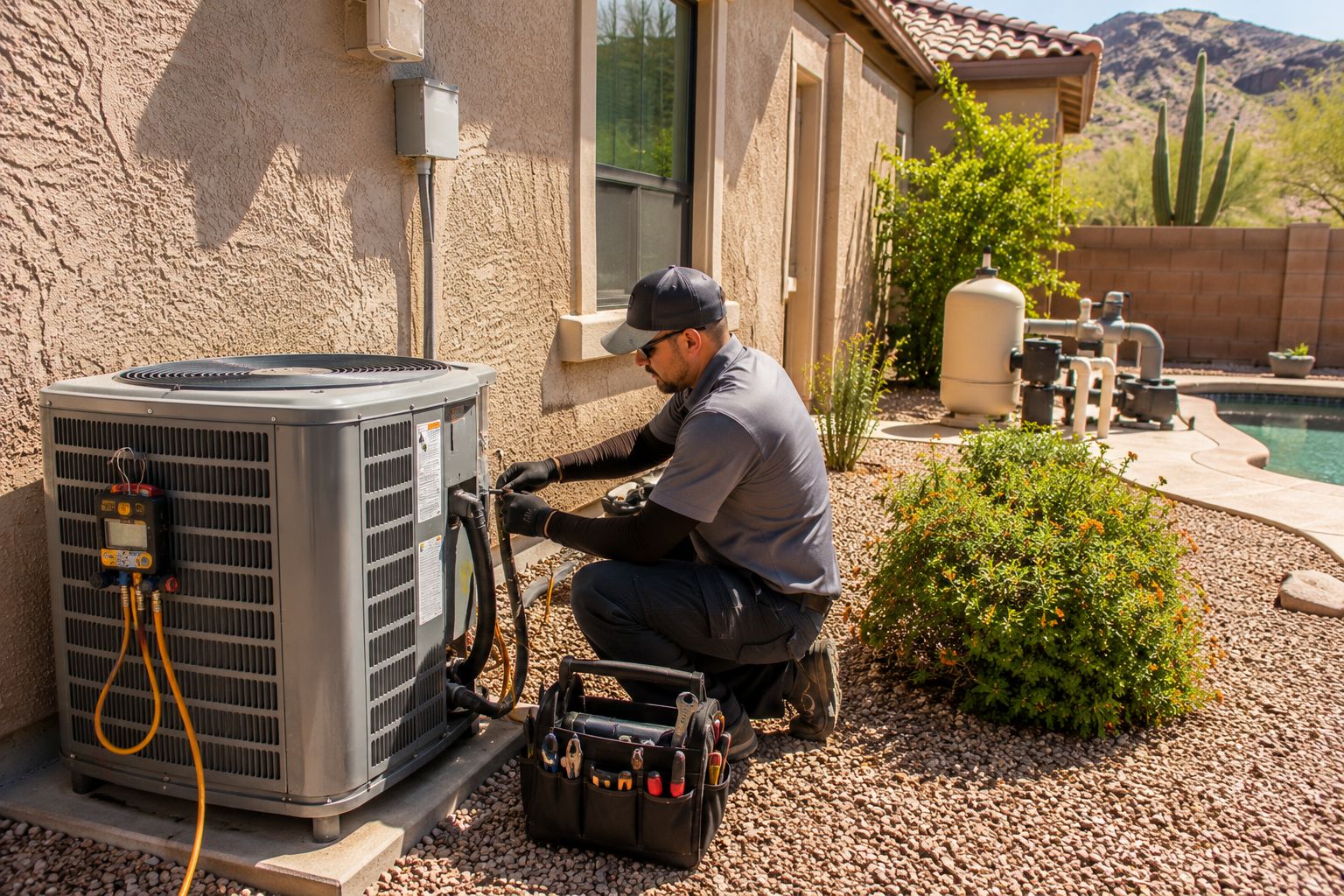
Phoenix-area rental properties come with local ownership realities. Desert climate, summer heat, HVAC wear, roof exposure, pool maintenance, landscaping, irrigation, insurance, HOA rules, and seasonal rental patterns can all affect the ownership experience.
That is why local knowledge matters.
When I help Phoenix-area rental owners think through their options, I look at more than whether the rent is coming in. I help them consider property condition, location, owner goals, timing, likely buyer appeal, ownership burden, and whether the property still fits the owner’s larger plan.
That does not mean every rental should be sold.
It means every rental should be reviewed with intention.
What This Question Sets Up Next
This is the first step in the process.
Before you measure whether a rental property is performing well, you need to define what performance means for you.
For one owner, performance may mean monthly income.
For another owner, it may mean long-term appreciation.
For someone else, it may mean less management, a simpler retirement plan, or a cleaner long-term plan.
Once you know what the property is supposed to do, the next question becomes easier:
Is the property actually doing its job?
That is where asset performance comes in.
In the next article in this series, we will look at your rental property as if it were an employee. If it worked for your company, would you keep it employed?
Frequently Asked Questions About Keeping a Rental Property
How do I know if my rental property still fits my goals?
Start by asking what you need the property to do now. Review whether it supports your income needs, retirement plans, time commitments, risk tolerance, and long-term goals.
Is positive cash flow enough reason to keep a rental property?
Not always. Positive cash flow is helpful, but it does not automatically mean the property still fits your goals. You also need to consider equity, effort, repairs, risk, and whether the property supports your current life stage.
Should I sell my rental property if I am tired of managing it?
Not automatically. Feeling tired of management may be a sign that it is time to evaluate your options. You may decide to keep the property, improve management, sell, or explore a 1031 exchange after reviewing the bigger picture.
What should I ask before considering a 1031 exchange?
Before considering a 1031 exchange, ask what you are trying to accomplish. Are you looking for more income, less management, tax deferral, diversification, retirement income, or more flexibility? The strategy should follow the goal.
What if my rental property has appreciated a lot?
Appreciation is valuable, but it does not answer every question. A property can increase in value and still no longer support your current goals. Appreciation should be considered along with income, risk, repairs, management, and future plans.
Who should I talk to before making a decision about my rental property?
Start with a real estate strategy conversation to clarify the property’s role in your plan. Then coordinate with your CPA, attorney, financial advisor, and a qualified intermediary if a 1031 exchange becomes part of the conversation.

Start With the Goal Before You Choose the Strategy
Your rental property may be exactly where it should be.
It may be producing the income you want, supporting your retirement goals, and fitting your long-term plan.
Or it may be time to look at it differently.
The point is not to sell.
The point is not to exchange.
The point is to make an intentional decision about an asset that may represent a major part of your wealth.
If someone handed you a check today equal to the value of your rental property, would you buy that same property again, or would you do something different?
If the answer is yes, keep exploring.
If the answer is no, it may be time to review your options.
If the answer is, “I’m not sure,” that is probably where the conversation should begin.
I’m Shirley Coomer, a licensed Arizona real estate agent with Keller Williams Realty, serving rental property owners and homeowners throughout the Phoenix metro area. If you are looking for a Phoenix real estate agent to help you clarify what your rental property is supposed to do next, you can call or text me at 602-770-0643 or email me at scoomer@kw.com to schedule a confidential Real Estate Strategy Session.
