
Your rental property may have done a good job for many years. It may have built wealth, produced income, and appreciated over time.
But rental property performance is not about what the property did ten years ago. It is about whether that property is still doing the job you need it to do today.
First, You Defined the Job. Now Review the Performance.
In the first article in this series, we started with one foundational question:
What is this rental property supposed to do for you now?
This second article moves from defining the property’s job to reviewing whether it is doing that job well.
That question matters because strategy should not come first. The goal should come first.
Before deciding whether to keep, sell, exchange, or do nothing, you need to know what job the property is supposed to perform. Is it supposed to create income, build wealth, simplify retirement, reduce management, support your estate plan, or create more flexibility?
Once the job is clear, the next question becomes easier.
Is the property actually doing the job well enough to stay employed?
That is where rental property performance comes in.
A rental property is not a pet. It does not need to be kept because you feel attached to it. It is an asset, and in this conversation, it helps to treat it like an employee inside your financial life.
Every employee should have a performance review.
Rental Property Performance Should Be Measured, Not Assumed.
Many rental owners assume a property is performing well because the tenant pays rent and the property has gone up in value.
Those are good things.
But they are not the whole picture.
A rental property can collect rent and still underperform. It can appreciate and still tie up too much equity. It can look successful on paper while still creating stress, surprise expenses, and management work that no longer fit your life.
That is why performance needs to be measured.
I’m Shirley Coomer, a licensed Arizona real estate agent with Keller Williams Realty serving the Phoenix metro area. Since 2005, I have worked with Phoenix-area homeowners, sellers, investors, and families who need more than a quick pricing opinion.
They need clarity.
They need to understand whether the property still fits their goals.
They need to know whether the asset is working hard enough.

Let’s Look at Susan, a Common Rental Property Owner Example.
To make this easier to see, let’s use a simple example.
Susan is a long-time rental property owner. She bought her property years ago to build long-term wealth, collect rent, and hold an appreciating asset.
If you read the first article in this series, you may remember Susan. If not, here is the short version: by most surface-level measures, her rental property looks successful.
The tenant pays on time.
The rent comes in.
The property has appreciated.
For many years, the property did its job. It helped Susan build equity and create income.
Now Susan is closer to retirement, and her life looks different.
Her priorities have changed. Her tolerance for repairs, tenant calls, insurance costs, and management decisions may not be the same as it was when she first bought the property.
So Susan is not only asking, “Has this been a good investment?”
She is asking, “Would I hire this property again today?”
If Susan owned a business, she would not keep an employee on payroll only because that person did good work years ago. She would look at current performance.
That is exactly how she needs to look at the rental property now.
A Good Rental Property Should Produce More Than It Consumes.
Every rental property consumes something. Ongoing maintenance, HOA fees, landscaping, pool service, and repairs are simply part of property ownership.
The issue is not whether the property has costs. Every investment does.
The better question is whether the property produces enough value compared with what it consumes.
A strong rental property should:
- Produce reasonable net income
- Preserve or grow long-term value
- Fit your current risk tolerance
- Require a manageable level of oversight
- Support your retirement or wealth plan
- Avoid creating unnecessary complications for your heirs
If the property is not doing those things, you do not have to make an immediate decision.
But you should review it.
The Rent Check Is Not the Same as Performance.
Many owners look at the monthly rent and stop there.
That is understandable because the rent check feels like the reward.
But rent is gross income. It is not true performance.
To understand property performance, Susan needs to look at what is left after real ownership costs.
That may include:
- Property taxes
- Insurance
- HOA fees, if applicable
- Property management, if used
- Repairs and maintenance
- Vacancy reserve
- Capital improvements
- Pool service, if applicable
- Landscaping or irrigation repairs
- HVAC service and replacement planning
- Roof repairs or replacement planning
- Turnover costs between tenants
This is where the numbers can surprise people.
A property may produce positive cash flow most months, but one major HVAC replacement, roof repair, plumbing issue, or vacancy can change the annual picture quickly.
Phoenix-area rentals also have local ownership realities. Desert heat, sun exposure, roof wear, irrigation systems, exterior paint, and HVAC strain can affect long-term costs.
That is why a simple rent-minus-expenses view is not enough.
You need to look at the property like a business asset.
Susan’s Numbers Show Why Performance Matters.
Let’s look at Susan’s rental property more closely.
Her property is currently worth approximately $800,000.
It rents for $3,000 per month, which creates $36,000 per year in gross rental income.
At first glance, that sounds strong.
But gross rent is not the same as net income.
These numbers are not meant to tell Susan what to do. They are meant to help her see the property clearly.
| Annual Operating Expense | Annual Cost |
|---|---|
| Property Taxes | $2,400 |
| Insurance | $1,500 |
| HOA Fees | $1,200 |
| Property Management, 8% | $2,880 |
| Vacancy Reserve, 5% | $1,800 |
| Repair Reserve, 10% | $3,600 |
| Landscaping and Miscellaneous | $600 |
| Total Expenses | $13,980 |
Now Susan can see the income more clearly.
| Income Calculation | Amount |
|---|---|
| Annual Gross Rent | $36,000 |
| Less Annual Expenses | $13,980 |
| Net Operating Income | $22,020 |
The property still appears to be doing well.
But now Susan needs to ask a different question.
Now Ask How Hard the Asset Is Working.
Susan owns an asset worth approximately $800,000.
That asset generates approximately $22,020 per year before appreciation.
In simple terms, the property’s current asset performance is approximately 2.75%.
There is not a right or wrong answer.
But there is an important question:
If you had $800,000 available today, would you intentionally invest it to earn $22,020 per year before appreciation?
That is the kind of question that turns a property owner into a planner.
It does not force a sale.
It does not force a 1031 exchange.
It simply creates a clearer conversation.
Reserves Help Owners Avoid Overestimating Performance.
Many landlords look at reserve numbers and say, “I did not spend that much on repairs this year.”
That may be true.
But the purpose of a repair reserve is not to predict this year’s exact expenses.
The purpose is to acknowledge that major expenses are part of ownership.
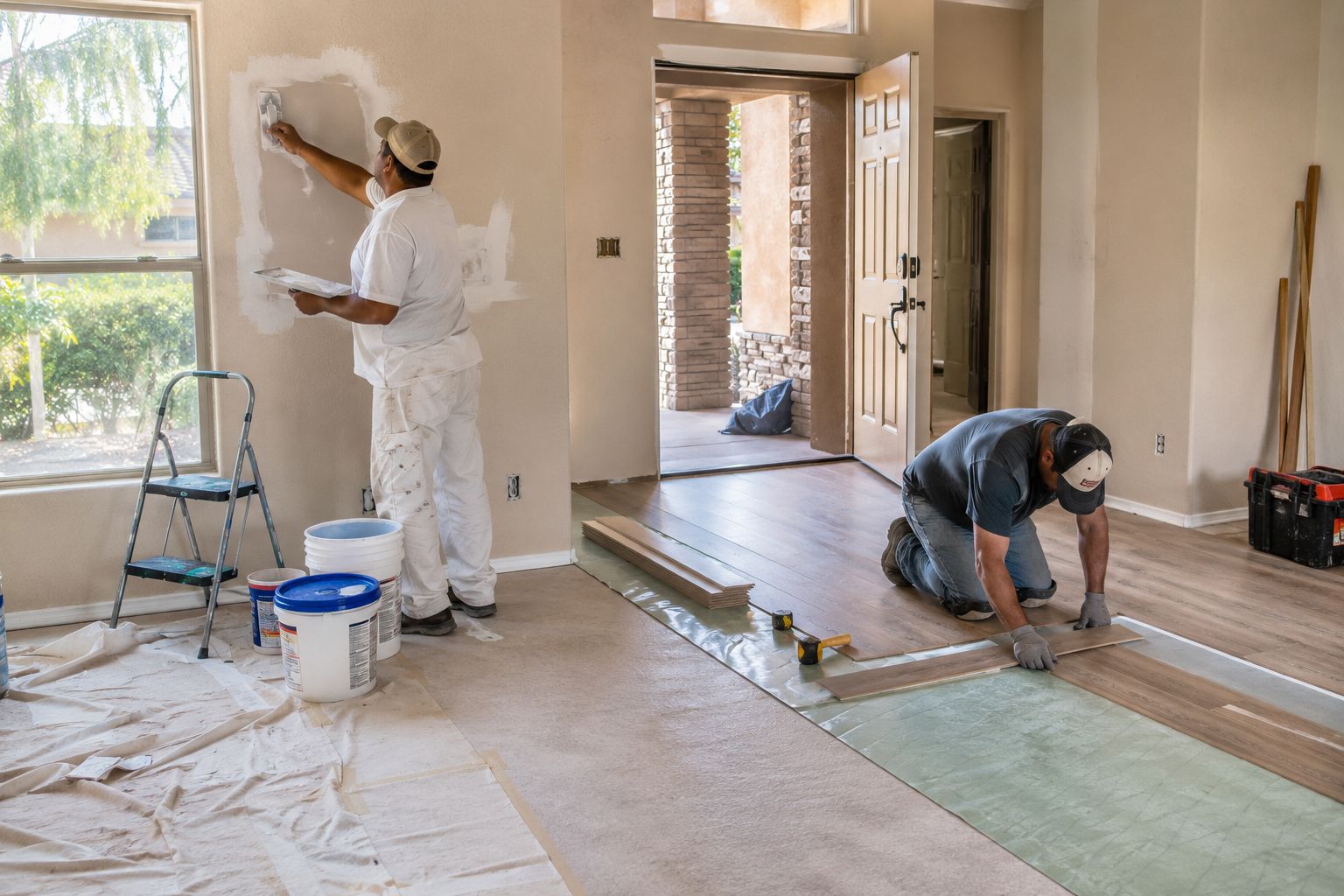
Eventually, many rental owners face expenses such as HVAC replacement, water heaters, roof repairs, appliances, flooring, plumbing, paint, turnover work, irrigation repairs, or pool equipment.
The same is true for vacancy.
Tenants move. Units need cleaning. Paint may need refreshing. Flooring may need attention. There may be a gap between one tenant moving out and the next tenant moving in.
Without reserves, many investors unintentionally overestimate how well a rental property is performing.
A property can look better on paper when future costs are ignored, but that does not make the numbers more accurate.
This matters in the Phoenix metro area, where heat, roof exposure, HVAC strain, and summer maintenance issues can affect ownership costs.
One Major Expense Can Change the Entire Year.
Now let’s look at what happens when real life shows up.
Susan’s property has a net operating income of $22,020 before appreciation.
That is the baseline.
But what happens when one larger expense hits the income side before appreciation is considered?
| Scenario | Cost | Annual Income After Expense | Approximate Asset Performance |
|---|---|---|---|
| HVAC Replacement | $12,000 | $10,020 | 1.25% |
| Roof Replacement | $18,000 | $4,020 | 0.50% |
| Tenant Turnover | $9,000 | $13,020 | 1.63% |
None of these situations are unusual.
They are part of owning rental property.
A new HVAC system, roof repair, turnover, paint, cleaning, flooring repair, or vacancy can dramatically reduce annual performance.
That does not mean Susan’s property is bad.
It means she needs to see the asset clearly.
The question is no longer only, “Is rent coming in?”
The better question is, “Is this property producing enough return for the amount of equity, risk, and responsibility involved?”
That is the employee review.
Return on Equity Helps You Compare Options.
Return on equity does not tell Susan what to do.
It gives her a comparison point.
If the property is producing approximately 2.75% before appreciation, Susan can now have a more informed conversation. She can compare the property’s return, risk, management burden, and future repair exposure against her current goals.
That does not automatically mean she should sell.
It does mean she should know what the asset is doing.
Could the same equity produce more income elsewhere?
Could it create less management?
Could it support retirement more efficiently?
Could it be repositioned into another real estate investment through a 1031 exchange?
Could it better support her estate plan?
These are not questions I answer as a tax advisor, attorney, or financial planner. They are planning questions that should be discussed with the right professionals.
My role is to help Susan understand the real estate side, including property value, condition, likely buyer appeal, market positioning, and possible sale strategy if she decides to explore options.
Appreciation Can Make an Average Asset Look Better Than It Is.
Appreciation can be powerful.
Many Arizona rental owners have built meaningful wealth because they held property over time. That should not be minimized.
However, appreciation can also hide weak performance.
A property may have gone up in value while producing modest net income. It may have appreciated while creating more repairs, more management, and more stress.
If Susan’s property has appreciated, that is good information.
But it does not answer every question.
She still needs to ask:
- Is the current income strong enough?
- Is the equity being used well?
- Are future repairs likely to reduce returns?
- Does the management burden still fit?
- Is she holding because the property is excellent, or because selling feels complicated?
For many owners, “selling feels complicated” includes tax concerns. That is real and should be reviewed with a CPA, attorney, financial advisor, and qualified intermediary when appropriate.
But tax concerns should not be the only reason an owner keeps a property that no longer fits.
Sometimes owners keep a property because it is truly performing well.
Other times, they keep it because they do not want to deal with taxes, deadlines, repairs, or decisions.
Those are not the same thing.
We will look more closely at appreciation, taxes, and the “stuck” feeling they can create later in this series.
The Property May Be Profitable and Still Not Be the Right Fit.
A rental property can be profitable and still no longer be right for the owner.
That may sound strange at first, but it is common.
A property may create income while the owner wants less responsibility. It may have appreciated while the owner wants more predictable cash flow. It may be manageable today, but the owner may worry about what happens if health, family, or estate issues change.
For many retirement-age rental owners, the question is not only financial.
It is also practical.
How much work should this stage of life require?
Profitability is not the same as alignment.
A rental property is underperforming when the income, equity, risk, and management burden no longer support the owner’s current goals.
That question will become even more important in the next article in this series, where we talk about landlord fatigue.
If the numbers are acceptable but the property is taking too much time, energy, and attention, the next issue may not be performance alone. It may be that the property has started managing you.
A 1031 Exchange Should Follow the Performance Review.
Many rental owners start by asking, “Should I do a 1031 exchange?”
A 1031 exchange may allow a real estate investor to sell one qualifying investment property and buy another qualifying replacement property while deferring certain taxes.
That may be an important tool, but it may be the wrong starting point.
A better question is, “What did the performance review show?”
If the property is doing its job well, keeping it may make sense.
If it is underperforming, creating too much stress, tying up too much equity, or no longer fitting the owner’s goals, then a 1031 exchange may become one possible planning tool to explore.
But the exchange itself is not the goal.
The goal may be more income, less management, better estate alignment, or a simpler retirement plan.
The strategy should follow the goal.
We will look more closely at 1031 exchanges, timelines, and Delaware Statutory Trusts later in this series. Before making decisions involving taxes, legal documents, estate planning, investment planning, 1031 exchanges, or DSTs, consult your CPA, attorney, financial advisor, and qualified intermediary.

Phoenix Rental Owners Need a Local Real Estate Review.
Rental property decisions are local.
A rental in Phoenix, Mesa, Chandler, Tempe, Ahwatukee, or another East Valley community may perform differently based on condition, layout, tenant demand, HOA rules, resale appeal, and repair profile.
Even two similar homes can tell very different stories.
One property may have strong buyer appeal because of location, floor plan, and condition. Another may look similar online but need major updates, roof work, HVAC replacement, pool repairs, or HOA review.
That is why local interpretation matters.
When I help Phoenix-area rental owners review a property, I look beyond an online value estimate. I consider the condition of the home, likely inspection issues, current ownership burden, buyer expectations, timing, and how the property may compete if it is sold.
I also look at the owner’s bigger question.
Is this property still the right asset for what they want next?
That is where a Real Estate Strategy Session can be helpful. It gives the owner a place to review the real estate side before jumping into a decision.
How to Give Your Rental Property a Simple Employee Review.
You do not need to make a final decision today.
Start with a simple review.
Ask your rental property these questions:
- What job are you supposed to perform now?
- Are you producing enough net income?
- How much equity are you using to produce that income?
- What repairs or capital expenses may be coming?
- How much time and energy do you require?
- Are you helping or complicating retirement?
- Would my family want to inherit and manage you?
- Would I buy you again today?
- Am I keeping you because you perform well, or because I am avoiding a hard decision?
- Should I explore options before I am forced to?
These questions do not automatically lead to selling.
They lead to clarity.
Some properties should be kept. Some should be improved. Some should be sold. Others may be candidates for a 1031 exchange after deeper conversations with a CPA, attorney, financial advisor, or qualified intermediary.
The point is to make the decision on purpose.
Frequently Asked Questions About Rental Property Performance
How do I know if my rental property is performing well?
A rental property is performing well when it supports your current goals, produces reasonable net income, uses equity efficiently, and does not create more stress or risk than you are willing to carry. The rent check alone is not enough to measure performance.
Is positive cash flow enough reason to keep a rental property?
Not always. Positive cash flow matters, but you also need to consider equity, repairs, vacancy, time, risk, future expenses, and whether the property still fits your retirement or estate goals.
What does return on equity mean for a rental property?
Return on equity looks at how much income the property produces compared with the amount of equity tied up in it. This can help long-time owners see whether the asset is working hard enough.
Why should I include vacancy and repair reserves?
Vacancy and repair reserves help you avoid overestimating performance. Even if you did not have a vacancy or major repair this year, turnovers, HVAC systems, roofs, appliances, and flooring eventually affect rental income.
Should I sell my rental property if it is underperforming?
Not automatically. Underperformance is a reason to review your options. You may decide to keep the property, improve operations, hire management, sell, or explore a 1031 exchange after speaking with the right professionals.
When should I think about a 1031 exchange?
Think about a 1031 exchange before you list the property, not after you are already under contract. A 1031 exchange has strict rules and timelines, so early planning with your tax professional and qualified intermediary is important.
What if I am not sure whether my rental property is worth keeping?
That is exactly when a Real Estate Strategy Session can help. You can review the property’s value, condition, likely selling issues, ownership burden, and possible next steps before making a decision.
Before You Keep the Property, Make It Reapply for the Job.
Your rental property may still be a great asset.
It may still deserve a place in your portfolio.
But it should not stay there by default.
If this property worked for your company, would you keep it employed?
If the answer is yes, that gives you useful clarity.
If the answer is no, that gives you useful clarity too.
If the answer is, “I’m not sure,” that may be the best reason to review it now.
I’m Shirley Coomer, a licensed Arizona real estate agent with Keller Williams Realty serving rental property owners and homeowners throughout the Phoenix metro area. Before you decide whether to keep, sell, or explore a 1031 exchange, get clarity on the real estate side first. You can call or text me at 602-770-0643 or email me at scoomer@kw.com to schedule a confidential Real Estate Strategy Session.
